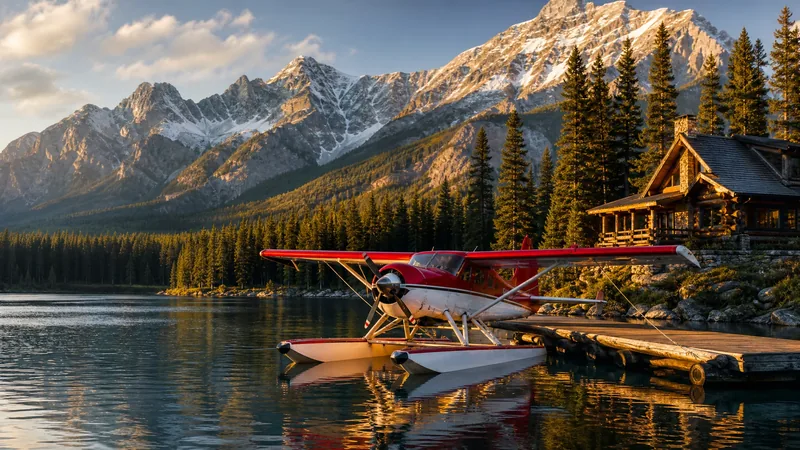
How to Start a Wilderness or Fishing Lodge in Alaska: Permits, Water, Food and Alcohol
How to Start a Wilderness or Fishing Lodge in Alaska: Permits, Water, Food and Alcohol
Opening an Alaska wilderness lodge means dealing with more agencies than most small businesses do. A lodge that serves meals, pours drinks, runs its own water system and takes guests out on the water has to clear state business licensing, environmental health rules, an alcohol license and, in many cases, federal land permits before the first booking. This guide puts those steps in a practical order. Where a figure must be confirmed with the agency that sets it, we say so.
This is informational content, not legal or tax advice. A lodge touches land law, tax, licensing and insurance at once. Talk with an Alaska attorney and a CPA before you sign a land lease, buy property or file any formation document.
Materials and information to gather first
Pull these together before you call any agency. Most delays come from a missing document, not from the rules themselves.
- A site description covering land status (private, state, municipal or federal), access (floatplane, boat, barge or road) and where water and waste will be handled
- A written service list: guest rooms, meals, guiding, alcohol service and any retail sales
- Estimated guests per night and length of season, since these affect which DEC rules apply
- A proposed business name, checked in the Division's entity search at https://www.commerce.alaska.gov/cbp/main/search/entities
- An Alaska registered agent: an Alaska resident individual or an authorized corporation. An LLC cannot serve as agent.
- A federal EIN from the IRS, once the entity exists
- A budget that includes filing fees, licenses, a registered agent, insurance and freight
Step-by-step: opening your Alaska lodge
Step 1: Define the lodge and confirm the land
Your permit list depends on what you build and sell. A lodge that feeds paying guests, sleeps them in more than one building and runs a bar faces different rules than a remote camp that serves only guided day trips. Write down the number of guest rooms, meals served each day, your water source (well, lake, stream or hauled water), whether you will sell alcohol and whether you will guide fishing yourself.
Then confirm the land before you spend on design. Private land with clear title is the simplest path. State land, Native corporation land and federal land each carry their own approvals. Remote sites in National Forest areas, such as parts of the Tongass or Chugach, normally need a Forest Service special use permit before you build or operate. Ask the land manager which permit applies and how long it takes.
Step 2: Form your entity with the Corporations Section
Alaska has no Secretary of State. Business filings go to the Corporations Section of the Alaska Department of Commerce, Community, and Economic Development, Division of Corporations, Business and Professional Licensing. Most lodge owners form an LLC with the Articles of Organization, Domestic Limited Liability Company (Form 08-0484). The filing fee is $250. A corporation files Articles of Incorporation (Form 08-0400) at the same fee. Online filings post immediately. Paper filings take 10 to 15 business days March through September and longer than 15 business days October through February. The Division offers no expedited service, so file online if timing matters. Forms are at https://www.commerce.alaska.gov/web/cbpl/Corporations.
Your name must include Limited Liability Company, LLC or L.L.C. An LLC may not use Inc. The name must be distinguishable from names already on record, and entity identifiers alone do not make it so. If you need time, a name reservation costs $25 and holds the name for 120 days.
The registered agent must maintain a physical Alaska street address and an Alaska mailing address. An LLC or LP cannot serve as agent. Attorneys, incorporated law firms and corporations authorized to transact business in Alaska can. Agent changes go on a Statement of Change (Form 08-409, $25), not the Biennial Report.
Step 3: Calendar the Initial and Biennial Reports
The Initial Report has no fee and is due within 6 months of formation. The Biennial Report costs $100 and is due January 2 every two years. An LLC formed in an even numbered year files in January of even numbered years, and one formed in an odd numbered year files in odd numbered years. Late penalties apply after February 1. Put the due date on your calendar the day you form the entity.
Tax treatment matters too. An LLC taxed as a partnership or sole proprietorship owes no Alaska income tax on its earnings, and Alaska has no franchise tax. An LLC that elects corporate taxation files Alaska corporate net income tax, graduated from 0% to 9.4%. The 0% rate applies to taxable income of $25,000 and below, and the 9.4% rate applies at $222,000 and over. Choosing a tax election is a decision for your CPA.
Step 4: Get the statewide business license and register any DBA
Alaska issues one statewide business license under AS 43.70 from the same Division. It is a separate application from forming the entity, and you need it before you engage in business in Alaska. A new application (Form 08-4181) costs $50 per year, and renewal (Form 08-4617) costs $50 per year. The only endorsement on the state license is for tobacco sales, at $100 per location. If a staff role is a regulated occupation under AS 08, that role needs its own professional license.
If the lodge will operate under a name different from the entity's name, register a Business Name Registration (DBA). It costs $25 (Form 08-557) for a five-year term and requires the state business license first. Renewal costs $25 (Form 08-560) in the fifth calendar year, between October 1 and December 31.
Step 5: Check city, borough and local tax rules
Alaska has no counties. Boroughs, cities and the Unorganized Borough handle local government. Some cities require a general business license and others do not. Anchorage, Ketchikan and Homer do not. Check with the clerk of your city or borough. If your site sits outside any city or borough, ask whether a local license applies at all.
Alaska has no state personal income tax and no state sales tax. Many cities and boroughs do levy local sales tax and bed tax, and the rules differ by place. Across 107 reporting municipalities, sales tax runs from 1% to 7%, typically 2% to 5%. Each municipality sets its own bed tax. Once you pick your exact location, confirm the sales and bed tax rate, collection method and filing schedule with that municipality. Lodges outside incorporated areas may face different local obligations, so confirm those with the Department of Revenue Tax Division at https://tax.alaska.gov/.
Step 6: Apply to DEC for food service and lodging
Lodge meal service may require a food establishment permit under 18 AAC 31. The requirement depends on how you prepare and serve meals, so describe your kitchen and serving plan to DEC Environmental Health early. Ask whether plan review is required before you build or remodel the kitchen. Lodging sanitation also falls under DEC review, so raise it in the same conversation. Confirm current forms and fees directly with DEC, since this guide does not list them.
Step 7: Confirm your water system status with DEC
Water is where remote lodges most often get surprised. Public water system rules under 18 AAC 80 depend on system size and the number of people served. A lodge with its own well, lake intake or stream intake that serves guests and staff may fall under those rules even if the setup looks like a private cabin system. Ask DEC early whether your system is public, what testing and reporting apply and what must be in place before you drill or install. Hauled water raises its own storage and handling questions. Do not assume a neighboring lodge's classification applies to you.
Step 8: Apply for the outdoor recreation lodge alcohol license
For guest alcohol service, the relevant option is the outdoor recreation lodge license under AS 04.09.280. The lodge must have at least two guest rooms and serve meals. The application fee is $500 for a new license and $300 for renewal, under 3 AAC 305.145. The biennial license fee is about $2,500 per AMCO, but treat that as an estimate until you check the current AMCO fee schedule. Some communities also restrict alcohol locally, so confirm your exact site before you commit to it. Do not serve alcohol until the license is issued.
Step 9: Register for guiding with ADF&G
If the lodge guides fishing, you need ADF&G guide registration. ADF&G lists the registration as free for 2026. Confirm that with the Alaska Department of Fish and Game before you advertise guided trips. Ask which registration covers the business and which covers each individual guide, and what records the agency expects you to keep.
Step 10: Secure federal permits and plan supply by air and barge
On remote sites, federal land permits often take the longest. Start those applications before you finalize the building plan, because the permit may dictate structures, setbacks or seasons. Confirm the permit type, fees and timeline with the agency that manages the parcel.
Supply is the other constraint. Most remote lodges depend on floatplanes or bush air carriers for guests and light freight, and on barge service for fuel, building materials and bulk food. Build a supply calendar around freight schedules, weather and storage. Plan fuel storage, waste removal and emergency access before opening day.
Fees at a glance
| Item | Amount | Where to confirm |
|---|---|---|
| Articles of Organization (LLC) or Articles of Incorporation | $250 | Corporations Section |
| Name reservation (120 days) | $25 | Corporations Section |
| Initial Report | No fee, due within 6 months | Corporations Section |
| Biennial Report | $100, due January 2 every two years | Corporations Section |
| Statement of Change (registered agent) | $25 | Corporations Section |
| Alaska business license (new and renewal) | $50 per year | Division of Corporations, Business and Professional Licensing |
| Business Name Registration (DBA) | $25, five-year term | Corporations Section |
| Alcohol license application | $500 new, $300 renewal | AMCO |
| Alcohol license biennial fee | About $2,500 (estimate) | AMCO fee schedule |
| ADF&G guide registration | Free for 2026; confirm with ADF&G | ADF&G |
| Local sales tax | 1% to 7% in reporting municipalities | Your city or borough |
| Bed tax | Set by each municipality | Your city or borough |
| DEC food and water requirements | Not listed here | DEC Environmental Health |
Common mistakes to avoid
- Forming the entity before confirming the land. A filed LLC gives you no right to a site.
- Assuming the state business license covers everything. It does not replace DEC, AMCO or local licenses.
- Assuming one city's rules apply everywhere. Local requirements differ.
- Treating water as a detail. Its classification drives the testing and setup you need.
- Serving alcohol before the license issues, or without the two guest rooms and meals the license requires.
- Trusting a fee from an older article. Check the agency page the day you file.
Tips for a smoother opening
- Call DEC, AMCO and the land manager before you finalize the building plan. Early answers prevent expensive redesigns.
- Keep one calendar with the 6-month Initial Report window, the January 2 Biennial Report and every permit renewal.
- Use the Alaska Small Business Development Center at https://aksbdc.org/ to test your assumptions and plan the business.
Expected results
A complete application package may help you move through state filings and licensing with fewer rounds of correction. Owners who confirm water, food and alcohol requirements before construction may avoid costly redesigns. Timelines depend on agency workload and freight schedules, which vary by season, and no outcome is guaranteed. Approval depends on each agency's review of your specific plan.
For formation questions, start at https://www.commerce.alaska.gov/web/cbpl/Corporations. For tax questions, use https://tax.alaska.gov/, and bring your CPA and attorney into the planning before you sign a lease or file anything.
Keep exploring: related Alaska guides
- How to Start a Vacation Rental or Cabin Rental Business in Alaska
- How to Start a Fishing Charter Business in Alaska
- How to Start a Tour Operator Business in Alaska
- How to Start a Flightseeing or Air Taxi Business in Alaska
- How to Start an LLC in Alaska
- Alaska Business License
- How Much Does It Cost to Start a Business in Alaska
- All Alaska business types
- Every Alaska guide in one place