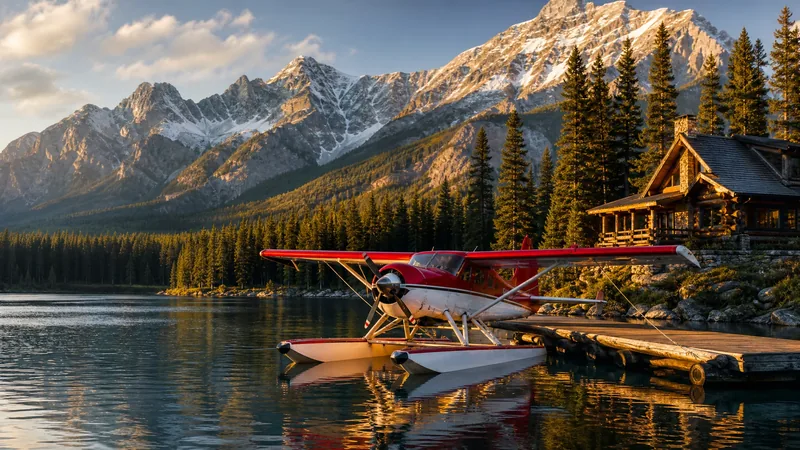
How to Start a Flightseeing or Air Taxi Business in Alaska: FAA Part 135 and State Licence
How to Start a Flightseeing or Air Taxi Business in Alaska: FAA Part 135 and State Licence
Flightseeing is one of the most visible businesses in Alaska, and one of the most regulated. A glacier tour out of Juneau or a bush trip out of Fairbanks is a commercial air operation, which puts the FAA at the center of your startup plan. The state paperwork is the easier half. This guide covers the order that works: entity, state business license, FAA certification, then the place-specific and land-use requirements that catch new operators off guard. If you are looking for an alaska air charter or alaska air taxi business plan, the same federal rules apply to both.
This article is informational only. It is not legal or tax advice. Aviation rules, state filings, and local ordinances change, so confirm every figure on the agency page before you file, and talk to an aviation attorney and a CPA about your situation.
What You Need Before You Start
Gather these items before you file anything. A missing item usually means a rejected filing or a delayed FAA application.
- A business name that meets Alaska naming rules and is not already on record.
- An Alaska registered agent with a physical Alaska street address and an Alaska mailing address.
- Filing money: $250 for Articles of Organization (LLC, Form 08-0484) or Articles of Incorporation (corporation, Form 08-0400), $50 for the state business license, and $25 if you want to reserve a name.
- A myAlaska account, used to log in to the state online filing system.
- A draft FAA package: operations manual, training program, drug and alcohol testing program, insurance, and a hazardous materials procedure if you will carry hazmat.
- Aircraft and pilots that meet FAA requirements for the operation you plan.
- Written permission from land managers for any floatplane water landings or remote gravel strips you plan to use.
- A list of every city and borough where you will sell, depart, or land, so you can check local licensing and tax in each one.
Step 1: Choose Your Entity and Understand the Tax Picture
Most flightseeing operators form an LLC. A corporation makes sense if you plan to bring in outside investors or several partners with formal governance needs. Both are filed with the Corporations Section of the Alaska Department of Commerce, Community, and Economic Development, Division of Corporations, Business and Professional Licensing (DCCED). Alaska has no Secretary of State, so do not look for filings there. Search existing names at the DCCED business entity search before you pick a name you cannot use.
Tax treatment is part of the choice. Alaska has no state personal income tax and no state sales tax. An LLC taxed as a partnership or a sole proprietorship owes no Alaska income tax on its earnings. A corporation, or an LLC that elects corporate taxation, files the Alaska corporate net income tax, which is graduated from 0% to 9.4%. The 0% rate applies to taxable income of $25,000 and below, and the 9.4% rate applies to taxable income of $222,000 and above. Federal tax is a separate question, and the right structure depends on your revenue, your owners, and whether you expect to take on debt or outside money.
Step 2: File the Entity and Appoint a Registered Agent
File online through the CBPL online corporate filing system, reached from the Corporations forms and fees page. Online filings post immediately. Paper filings take 10 to 15 business days from March through September, and longer than 15 business days from October through February. If you mail a filing in the fall, do not plan a launch date around it.
Naming rules are strict. An LLC name must include Limited Liability Company or an abbreviation such as L.L.C. or LLC, and an LLC may not use Inc. The name must be distinguishable from names already on the record under 3 AAC 16.120(a). Entity identifiers alone do not make a name distinguishable, so changing only the ending of an existing name will not solve a conflict. If you need time to line up your FAA paperwork and insurance, reserve the name for $25. The reservation lasts 120 days.
Every registered entity must continuously maintain an Alaska registered agent with a physical Alaska street address and an Alaska mailing address. The agent may be an individual who is an Alaska resident, meaning physically present in Alaska with the intent to remain indefinitely, or a business, professional, or nonprofit corporation authorized to transact business in Alaska. Attorneys and incorporated law firms may serve. An LLC cannot be a registered agent, and an entity cannot be its own agent. If you change agents later, you cannot do it on the Biennial Report. Use the Statement of Change, Form 08-409, which costs $25.
Your entity also owes an Initial Report with no filing fee, due within 6 months of formation.
Step 3: Get the Statewide Business License
Alaska has one statewide business license, issued under AS 43.70 by the same DCCED division. It is separate from forming your entity, even though both come from the same office. You must hold it before you engage in business activity in Alaska, so have it in hand before you take your first paid booking.
The verified fee is $50 per year for a new application (Form 08-4181) and $50 per year to renew (Form 08-4617). The only endorsement is a tobacco endorsement at $100 per location, which does not apply to tours. The license is also available as a $100 biennial option. Confirm with DCCED which term applies to your business before you pay. Pilots and other FAA-certificated staff are regulated federally, so ask DCCED whether any other state professional license applies to your role. Do not assume the answer.
Step 4: Register a Business Name (DBA) If You Need One
If you will operate under a name other than your entity's legal name, such as a brand name for tours, you need a Business Name Registration (DBA). It costs $25 (Form 08-557) and has a five-year term. You must hold your Alaska business license before you file it. Renewal costs $25 (Form 08-560) and is filed in the fifth calendar year, between October 1 and December 31. If your entity is already on record with the Corporations Section, it has exclusive rights to its own registered name and needs only a DBA to operate under a different one. Check the forms and fees page for current versions of these forms.
Step 5: Get FAA Certification Under Parts 119 and 135
This is the step that decides whether your business can fly paying customers, and it runs on federal rules, not state rules. The FAA states in InFO 24002 Rev 1, dated April 24, 2025, that your state guide license does not decide which FAA rules apply to your operation. Commercial flightseeing is governed by Part 135, and Part 119 sets the certification requirements that go with it. Air taxi and on-demand charter operations also fall under Part 135.
A Part 135 package typically includes a drug and alcohol testing program, a training program, an operations manual, hazmat procedures where they apply, and insurance that meets FAA expectations. Contact your local FAA Flight Standards District Office early, before your state paperwork is finished. Plan for the FAA process to take longer than the state filings, and do not promise customers a start date until the FAA has approved your operation. Learn the current requirements directly from the FAA website.
Step 6: Plan for Floatplane and Remote Strip Operations
Floatplane and remote strip operations add requirements on top of Part 135. Water landing areas and gravel strips sit on private, state, federal, or village-owned land, and each land manager may set conditions, require permission, or charge fees. Get written permission before you schedule a landing, and confirm any seasonal restrictions. Your FAA package should reflect the specific water bodies and strips you plan to use, not a generic list. Expect the FAA to ask how you handle each location, and expect your insurer to ask the same questions.
Step 7: Check City and Borough Requirements
Alaska has no counties. Its local governments are boroughs, cities, and the Unorganized Borough. Local general business license rules differ by city. Some cities require one, while Anchorage, Ketchikan, and Homer do not. Check with the clerk or licensing office in each city or borough where you will sell, depart, or land.
Local sales tax is a separate issue. Alaska has no state sales tax, but 107 reporting municipalities levy local sales tax, with rates from 1% to 7%, typically 2% to 5%. Many cities and boroughs also levy a bed tax, which can matter if your packages include lodging. Rates and rules differ by place, so do not apply one city's rate to a trip that starts or ends somewhere else. Ask each jurisdiction which sales it taxes and how it treats a ticket sold in one place for a flight that departs from another. The Alaska Department of Revenue, Tax Division, at tax.alaska.gov, is the starting point for state tax questions.
Ketchikan deserves special attention. The National Transportation Safety Board has put pressure on air tour operations in the Ketchikan area. Expect closer scrutiny of your safety practices, and build your operations manual and training records as if an investigator will read them.
Step 8: Set Up Ongoing Compliance
Your LLC or corporation files a Biennial Report every two years, not annually. The fee is $100, and the report is due January 2 of the year that matches your formation year. A company formed in an even year files in even years, and one formed in an odd year files in odd years. Late penalties apply after February 1. Put the date on a calendar the day you form the entity.
If you are taxed as a corporation, the corporate income tax payment is due on or before the 15th day of the fourth month after the close of the tax year, and returns are due 30 days after the federal return due date. Keep your FAA training records, testing program files, and insurance renewals current. Your state business license also needs annual renewal at $50 per year, unless DCCED confirms a different term for your license.
Tips for Getting It Right
- Start the FAA conversation before the state filings are done. The federal process is usually the slowest part.
- Ask an aviation attorney to review your operations manual and your insurance policy together. They are linked.
- Use the Alaska Small Business Development Center for planning help on budgets, permits, and business structure.
- Keep a single filing calendar with the biennial report, license renewal, DBA renewal, registered agent, and insurance dates.
- Write down which land managers and cities you have confirmed, and when. Your next season will depend on those records.
Common Mistakes to Avoid
- Treating the state business license as FAA approval. It is not. Part 135 is a separate process.
- Assuming one city's business license or tax rule applies in the next city over.
- Naming an LLC with Inc. in the name, or choosing a name that differs from an existing one only in its ending.
- Using a registered agent that does not meet Alaska requirements, such as an LLC or an address you cannot keep staffed.
- Missing the Biennial Report deadline. Late penalties apply after February 1.
- Booking floatplane landings or remote strips before the land manager has signed off.
- Mailing a paper filing in October and expecting a quick answer.
What Results to Expect
If you complete these steps in order, you should end up with a formed entity in good standing, a registered agent in place, a state business license, and a defined path to FAA certification. Results vary. FAA timing, aircraft and insurance costs, land manager requirements, and local rules can all change how quickly you can open, so treat this guide as a checklist to work through with professionals, not a promise of approval or a launch date.
Final Notes and Disclaimer
This guide is informational content for business owners exploring a flightseeing or air taxi business in Alaska. It is not legal, tax, or aviation advice, and it does not create an attorney-client or accountant-client relationship. Verify every fee, deadline, and requirement with the agency that administers it: DCCED for entity filings and the business license, the Alaska Department of Revenue for taxes, the FAA for Part 119 and Part 135 certification, your city or borough for local licensing and tax, and the relevant land manager for any landing site. Because a flightseeing business combines federal aviation rules, state business law, tax planning, and insurance, consult a qualified aviation attorney and a CPA before you file or take your first booking.
Keep exploring: related Alaska guides
- How to Start a Fishing Charter Business in Alaska
- How to Start a Native Arts and Crafts Business in Alaska
- How to Start a Wilderness or Fishing Lodge in Alaska
- How to Start a Sport Fishing Guide Business in Alaska
- How to Start an LLC in Alaska
- Alaska Business License
- How Much Does It Cost to Start a Business in Alaska
- All Alaska business types
- Every Alaska guide in one place