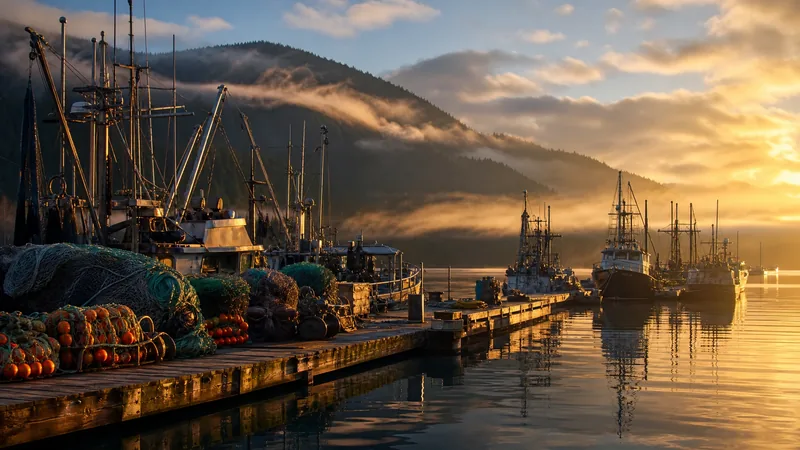
How to Start a Seafood Processing Business in Alaska: DEC Permit and Fisheries Business Licence
How to Start a Seafood Processing Business in Alaska: DEC Permit and Fisheries Business Licence
Alaska seafood processing is a core part of the state economy, and it is one of the more paperwork-heavy ways to start a business here. Whether you plan to run a shore-based alaska fish processor or a floating operation, you will work through three separate tracks: a food safety permit from the Department of Environmental Conservation (DEC), a fisheries business licence from the Department of Revenue, and the ordinary entity and tax filings every company needs. Seafood processing was also the biggest job loser in 2025, so conservative staffing and cash planning are practical first steps.
This guide puts those tracks in a workable order, lists the fees as currently published, and points out the mistakes that delay new plants.
What you need before you start
Gather these items before you file anything. A missing item usually stalls the whole sequence.
- A decision on processing type: shore-based (land based) or floating (processing vessel), plus your realistic daily pounds
- A business name checked against the Corporations database
- An Alaska registered agent: an Alaska resident individual or an authorized corporation. An LLC cannot serve as registered agent.
- A site or vessel, and a plan for water supply, sanitation, and waste handling
- A federal Employer Identification Number (EIN) from the IRS
- A budget that covers the state fees below plus attorney and CPA time
Step 1: Pick your processor type and volume
DEC sets your annual permit fee by two things: where the processing happens and how many pounds per day you process. The categories in 18 AAC 34 include:
- Land based processing (shore-based plants)
- Processing vessels (floating operations)
- Thermal processing, such as cooking, smoking, or canning
- Direct market land based operations
Set your volume assumption on purpose. If your peak season could reach 5,000 pounds per day, price the higher tier into your plan from the start. Ask DEC how it measures daily volume before you commit to a number, because the fee tier turns on it.
Step 2: Form the business entity
Most processors form an LLC or corporation before they apply for permits. Filings go to the Corporations Section of the Division of Corporations, Business and Professional Licensing (CBPL), which is part of the Department of Commerce, Community, and Economic Development. Alaska has no Secretary of State and no counties. Boroughs, cities, and the Unorganized Borough handle local government instead.
- Reserve the name (optional). A name reservation costs $25 and holds the name for 120 days.
- Choose a compliant name. An LLC name must include Limited Liability Company, LLC, or L.L.C. An LLC may not use Inc. in its name. The name must also be distinguishable from names already on the record. Words like inc., corp., or llc alone do not make a name distinguishable.
- File the formation document. For an LLC, file Articles of Organization, Domestic Limited Liability Company (Form 08-0484), for a $250 filing fee. For a corporation, file Articles of Incorporation, Domestic Business Corporation (Form 08-0400), also $250. Confirm the current fee on the Corporation Forms and Fees page before you pay.
- Name a registered agent. Your registered office needs both a physical Alaska street address and an Alaska mailing address, and the agent must keep those addresses current.
- Calendar the biennial report. The Biennial Report costs $100 and is due January 2 every two years, in the even or odd year matching your formation year. Late penalties apply after February 1. A no-fee Initial Report is due within 6 months of formation.
Online filings post immediately. Paper filings take 10 to 15 business days from March through September, and longer than 15 business days from October through February. If you file on paper now, plan for the longer window. Alaska publishes no expedited service, so the online portal is the fastest route.
Forming an entity does not give you a processing permit or a fisheries license. Those come from other agencies.
Step 3: Work out the state business license exemption
Alaska requires a statewide business license under AS 43.70 from CBPL before you engage in business activity in the state. The fee is $50 per year for a new application (Form 08-4181) and $50 per year to renew (Form 08-4617).
Fisheries businesses are exempt from that license under AS 43.70.105(a)(1). That exemption covers the fisheries activity. If you also run a separate non-fishery business, such as a retail counter, a restaurant, or a gift shop, that part may still need the $50 license. Confirm with CBPL which of your activities fall under the exemption before you assume it covers everything you do.
Step 4: Get the DEC seafood processor permit
DEC's Division of Environmental Health handles seafood processor permits under 18 AAC 34. The annual fees appear in 18 AAC 34.900. The figures below come from a Cornell Legal Information Institute copy of that regulation. Confirm them with DEC before you budget, because the 2026 schedule may have changed.
| Operation type | Daily volume | Annual fee (per copy reviewed) |
|---|---|---|
| Land based processing | Under 5,000 pounds | $795 |
| Land based processing | 5,000 pounds or more | $2,094 |
| Processing vessel | Under 5,000 pounds | $795 |
| Processing vessel | 5,000 pounds or more | $2,094 |
| Thermal processing | Confirm which tier applies | $1,120 or $2,094 |
| Direct market land based | Confirm applicable tier | $200 |
To apply, contact DEC's Division of Environmental Health through the state's DEC site at dec.alaska.gov. Ask three questions before you sign a lease or buy a vessel:
- Which application forms and facility documents does DEC require for my plant type?
- Does DEC review plans or inspect the facility before the permit issues?
- How does DEC measure daily pounds for fee purposes?
The answers affect your floor plan, water system, and waste plan, so get them early.
Step 5: Register for the fisheries business licence and the Fisheries Business Tax
The Department of Revenue issues the fisheries business licence under AS 43.75. The statute copy reviewed shows a $25 annual fee per plant. That figure may have changed, so check Revenue Online at tax.alaska.gov for the current fee before you budget. If you operate more than one plant, the per-plant structure means each one carries its own fee.
The Fisheries Business Tax and related assessments are separate from the licence. They are administered through the same department, but the rates, assessment schedules, and filing frequency are not settled here. Confirm each one directly with Revenue and ask how your processor type and volume affect your reporting obligations.
Step 6: Check local requirements
Local rules change the closer you get to the plant. Some cities require a general business license, while others do not. Anchorage, Ketchikan, and Homer do not. Check the city or borough where your plant sits, and also check any city where you plan a retail counter or office.
Alaska has no statewide sales tax, but many cities and boroughs levy local sales tax and bed tax. Rates vary by place. Do not assume the rate in one coastal community applies to another. Look up the exact city or borough for each location, including the processing hubs such as Unalaska, Akutan, Sitka, and Petersburg.
Step 7: Set up taxes, records, and professional review
Your entity type sets your state income tax position. Alaska has no personal income tax. An LLC or sole proprietorship taxed as a partnership owes no Alaska income tax on its earnings. An LLC that elects corporate taxation files the Alaska corporate net income tax, graduated from 0% to 9.4%. The 0% rate applies to taxable income of $25,000 and below, and the 9.4% rate applies to taxable income of $222,000 and over. Returns are due 30 days after the federal return due date, and payment is due on or before the 15th day of the fourth month after the close of the tax year.
Keep daily records of pounds received, pounds processed, product sold, and crew hours. Those records feed your DEC fee tier, your Fisheries Business Tax reporting, and your annual tax filings.
Federal food safety and fishery rules may also apply to your operation, and the EIN is only the starting point. A qualified attorney can confirm entity and licensing questions, and a CPA can model your tax position under each entity choice.
Common mistakes to avoid
- Budgeting from the copied fee table alone. The DEC and Revenue figures above need confirmation with the agencies before you commit money.
- Assuming the fisheries exemption covers everything. A separate retail or restaurant activity can need its own $50 business license.
- Naming an LLC as your registered agent. An LLC, LLP, or LP cannot serve, and an entity cannot be its own agent.
- Missing the biennial report. Penalties apply after February 1, and the report is not optional.
- Choosing a site before talking to DEC. Water, waste, and layout requirements can force expensive changes.
- Ignoring local sales and bed tax. Each city and borough sets its own rules.
Tips for a smoother launch
- File the entity first, then open the Revenue and DEC conversations with your articles and EIN in hand.
- Choose shore-based or floating based on your actual site, crew housing, and seasonal volume, not on the lowest fee tier.
- Use the Alaska Small Business Development Center at aksbdc.org for free or low-cost advising before you sign a lease.
- Check the SBA's Alaska district page at sba.gov/district/alaska for financing and counseling resources.
- Budget for a cash reserve. Seafood processing was the biggest job loser in 2025, and seasonal plants carry fixed costs in slow months.
Expected results
A complete, well-organized filing package may help you move through the entity, licensing, and permit steps with fewer corrections. Early answers from DEC and Revenue could reduce the chance of redesigning your facility or re-registering later. Keeping clean daily records is designed to make your fee reporting and tax filings easier to support if an agency asks questions. These are reasonable goals, not guaranteed outcomes. Timelines depend on agency workload, the filing method you choose, and the completeness of your application.
Official resources
- Corporations, Business and Professional Licensing: commerce.alaska.gov/web/cbpl/Corporations
- Online business entity search: commerce.alaska.gov/cbp/main/search/entities
- Department of Revenue, Tax Division (fisheries licence, Fisheries Business Tax, income tax, Revenue Online): tax.alaska.gov
- Department of Environmental Conservation (seafood processor permits): dec.alaska.gov
- Alaska Small Business Development Center: aksbdc.org
- SBA Alaska district office: sba.gov/district/alaska
Disclaimer: This article is informational content, not legal or tax advice. Fees, rates, and deadlines change, and the figures here reflect the sources cited when this guide was written. Confirm every number with the named agency before you file or budget. For entity choice, permits, tax treatment, and federal food safety or fishery rules, consult a qualified Alaska attorney and a CPA who works with seafood businesses.
Keep exploring: related Alaska guides
- How to Start a Restaurant in Alaska
- How to Start a Bakery Business in Alaska
- How to Start a Food Truck Business in Alaska
- How to Start a Bar or Tavern in Alaska
- Alaska Alcohol License Types and Fees
- How to Start an LLC in Alaska
- Alaska Business License
- How Much Does It Cost to Start a Business in Alaska
- All Alaska business types
- Every Alaska guide in one place