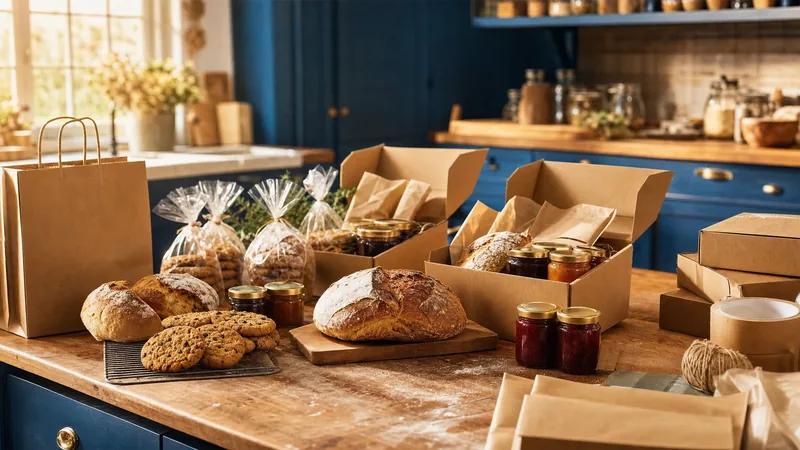
How to Start a Cottage Food Business in Alaska: The Homemade Food Exemption
How to Start a Cottage Food Business in Alaska: The Homemade Food Exemption
If you bake bread, make jam, or put up pickles in your home kitchen, Alaska's cottage food law may let you sell those products without a state food permit. The rules changed recently, and many older guides still describe a permit that no longer exists. This guide walks through the current steps, the fees you can confirm today, and the points you need to check with the agency that enforces them.
Disclaimer: This article is informational, not legal or tax advice. Rules change, and city and borough rules vary. For decisions that affect your money, your liability, or your home, talk with a qualified attorney or CPA, and confirm food rules directly with the Alaska Department of Environmental Conservation (DEC).
What the Alaska cottage food law actually does
The current alaska cottage food law is House Bill 251, codified at AS 17.20.332 to 17.20.338, which took effect on July 1, 2024. It exempts homemade foods that meet its minimal rules from state labeling, licensing, permitting, and inspection requirements. DEC does not issue a homemade food permit. If someone tells you to apply for one, ask them which statute or rule they are relying on.
Two older items still show up in search results, so know what they mean. First, DEC repealed the conflicting regulation, 18 AAC 31.012(a), effective May 11, 2025, so the old rule no longer controls your operation. Second, some secondary guides describe a $25,000 annual sales cap. That figure is not part of the statute as those guides summarize it, so do not build your plans around it. Ask the DEC Food Safety and Sanitation Program whether any cap or labeling rule applies to you today, and save the answer in writing.
The exemption is also narrower than many sellers expect. Meat, seafood, and alcohol are outside it. Those products still fall under other rules, and mixing them into a cottage food operation can put the whole business outside the exemption. If your recipe list includes any of them, separate them out before you go further.
Materials and information you need before you start
You do not need a commercial kitchen for this model, but you do need a short set of tools and records before your first sale. Gather these items first so you are not making decisions under pressure at a market table.
- Written recipes. Keep one recipe card for every product, with exact ingredients and weights or measures, so each batch you sell matches the batch you tested.
- Kitchen equipment. A calibrated kitchen scale, measuring tools, and a food thermometer for any product that needs a cooking or cooling check.
- Labels. A label template with the product name, ingredients, your name and address, a date made, and an allergen statement. Treat this as good practice, then confirm with DEC which elements the exemption requires.
- A sales log. A spreadsheet or notebook recording the date, product, price, sales channel, and payment method for every transaction.
- Your Alaska business license application. Form 08-4181, which costs $50 for a one-year license or $100 for a two-year license.
- Local rules. The business license and home business rules for your city or borough, plus the local sales tax rate where you will sell.
- Separate money. A separate bank account, or at minimum a separate ledger, for business income and expenses.
Step-by-step: from home kitchen to first sale
- Confirm your product is inside the exemption. List every product you plan to sell and check it against the exemption. Anything containing meat, seafood, or alcohol is outside it. If a product is borderline, ask DEC in writing before you sell it, and keep the reply with your business records. A written answer protects you far better than a verbal one from a counter clerk or a market manager.
- Ask DEC what applies today. Contact the DEC Food Safety and Sanitation Program and ask three questions: whether the HB 251 exemption covers your product, whether any sales cap or labeling rule applies, and which label elements are required. Ask for the answers in writing. This step is the core of any serious alaska cottage food law plan, because the statute sets minimal rules and the agency can tell you how it applies to your specific product.
- Check your city, borough, and military rules. Cities, boroughs, and military installations may add their own rules on top of state law. The Anchorage Assembly took up ordinance AO 2025-114 on November 4, 2025, which would repeal the city's separate cottage food licence. Check its current status with the Anchorage Health Department before you decide whether a city license applies to you. Local general business licenses also differ by place. Some cities require one, while Anchorage, Ketchikan, and Homer do not. Confirm the rule for every city or borough where you will sell or store product.
- Get the statewide business license. Alaska requires a state business license under AS 43.70 before you engage in business activity in the state. It is separate from forming an LLC or corporation, which is handled by the same division but is not required for a sole proprietor. Apply through the Division of Corporations, Business and Professional Licensing (Form 08-4181; $50 for a one-year license or $100 for a two-year license). Renewal is Form 08-4617. The only endorsement on the state license is the $100 per location tobacco and nicotine retail endorsement, which does not apply to food products.. The exemption from food permits does not waive this license.
- Choose your business name and file a DBA if needed. If you sell under your own legal name, you may not need a separate registration. If you sell under a different name, file a Business Name Registration (DBA) for $25 on Form 08-557. A DBA runs for five years. Renewal is $25 on Form 08-560, filed in the fifth calendar year between October 1 and December 31. Your Alaska business license must be in place before you file the DBA.
- Register for taxes and plan for sales tax. Alaska has no state personal income tax and no statewide sales tax, so the state does not tax your sales at the state level. Federal income and self-employment taxes still apply to your profit, and that is where a CPA can help. Many cities and boroughs levy local sales tax, and the rate depends on where the sale happens. Confirm the rate and your filing duties for each place where you sell with that city or borough's tax office. For state guidance, use the Alaska Department of Revenue, Tax Division at tax.alaska.gov.
- Write a short food safety routine. Food safety here means control and cleanliness. Clean and sanitize work surfaces before and after production, wash hands before handling ingredients, keep pets and children out of the production area, and keep raw ingredients separated from finished product. Hold any perishable item at safe temperatures and record the date each batch was made. These are general food safety practices, not a summary of the statute, so write them as your own checklist and pin it near your workspace.
- Print compliant labels and test your label text. Use your label template from the materials list, then match it against DEC's answer from step 2. Do not add health claims such as that a product cures, prevents, or boosts immunity. Describe the ingredients and the food itself.
- Pick your sales channels and read their rules. Farmers markets, craft fairs, and direct orders each have their own rules, such as vendor applications, booth fees, insurance certificates, and display requirements. Ask the market manager for the written vendor rules before you apply. Sales at military installations may carry their own requirements, so ask the installation before you plan a table there.
- Keep records and plan your filing calendar. As a sole proprietor, keep sales and expense records for your tax filing and your local sales tax obligations. If you later form an LLC or corporation, the biennial report is due January 2 every two years and costs $100. An initial report is due within six months of formation and carries no fee. Late penalties apply after February 1, so put the date on your calendar now.
Common mistakes to avoid
- Assuming the exemption covers everything. Meat, seafood, and alcohol are outside it. Read each recipe against that list before you add a product to your menu.
- Skipping the statewide business license. The exemption removes the food permit, not the business license. The AS 43.70 license still applies.
- Relying on the old rule or a secondary guide. The conflicting rule 18 AAC 31.012(a) was repealed effective May 11, 2025, and the $25,000 cap described in some guides is not part of the statute as summarized. Get DEC's answer in writing.
- Assuming one city's rules apply everywhere. A general business license might be required in one place and not in another. Anchorage, Ketchikan, and Homer do not require one, while other cities may. Check each place where you sell or store product.
- Forgetting local sales tax. Many cities and boroughs levy sales tax, and the rate varies by place. A market in one borough and an online order shipped from another can produce different tax duties.
- Shipping product out of state. The exemption is written around Alaska sales. Interstate shipping can bring in federal FDA rules that the state exemption does not address. Ask before you ship anything outside Alaska.
- Making health claims. Labels and social posts that promise health outcomes create legal and credibility problems. Describe the food, not what it does for the body.
- Going without insurance. Ask an insurance agent about product liability coverage, and check whether your market or venue requires a certificate of insurance before you apply.
Expected results
The exemption is designed to let small home producers sell certain foods without a state food permit, so it may make a first season simpler and cheaper to start. It does not guarantee that any particular product is accepted, and only DEC can confirm whether your product fits. Results depend on your product, your local demand, and the rules of each place where you sell. Some home sellers begin with farmers markets and direct orders, then use customer feedback to decide what to make next. Revenue is not promised, and you should plan on a slow first season while you learn what sells.
Your fixed startup costs are modest on paper. The statewide business license is $50 for one year or $100 for two, a DBA is $25 if you use a different name, and the DBA renews at $25 in its fifth calendar year. Ingredients, packaging, insurance, and market fees will usually cost more than those state filings, so budget for them separately. Confirm every local fee directly with the city, borough, or market before you rely on it.
Official resources and free help
- Division of Corporations, Business and Professional Licensing (business license, DBA, and entity filings): https://www.commerce.alaska.gov/web/cbpl/Corporations
- Alaska Department of Revenue, Tax Division (state tax guidance): https://tax.alaska.gov/
- Alaska Small Business Development Center (free and low-cost advising): https://aksbdc.org/
- U.S. Small Business Administration, Alaska district (local resources): https://www.sba.gov/district/alaska
Food rules are the part of this plan most likely to change, so treat DEC's written answer as the controlling source. If your plans involve more than a few home products, multiple sales locations, or any product outside the exemption, a qualified attorney or CPA can review your setup before you spend money on ingredients or inventory. A single conversation at the start is usually cheaper than fixing a problem after your first market season.
Keep exploring: related Alaska guides
- How to Start a Coffee Shop Business in Alaska
- How to Start a Direct-Marketing Seafood Business in Alaska
- How to Start a Catering Business in Alaska
- How to Start a Food Truck Business in Alaska
- Alaska Alcohol License Types and Fees
- How to Start an LLC in Alaska
- Alaska Business License
- How Much Does It Cost to Start a Business in Alaska
- All Alaska business types
- Every Alaska guide in one place