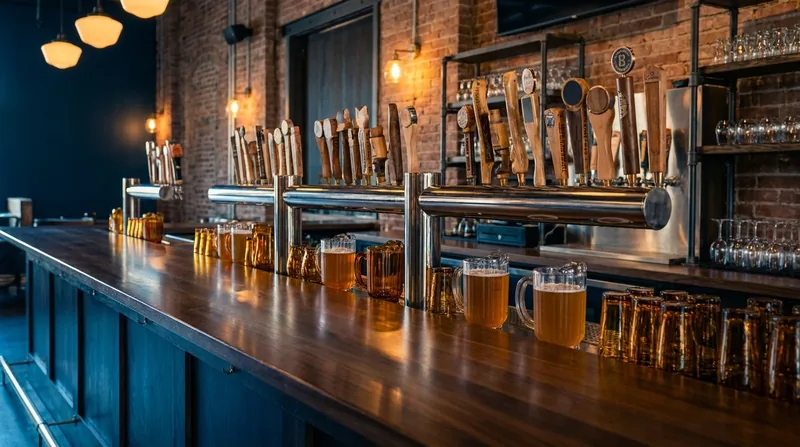
How to Start a Brewery, Distillery or Winery in Alaska: Manufacturer Licences
How to Start a Brewery, Distillery or Winery in Alaska: Manufacturer Licences
Opening an alcohol manufacturing business in Alaska means working through four separate authorities in the right order. The Alcohol and Marijuana Control Office (AMCO) issues the state manufacturer license for your product. The Division of Corporations, Business and Professional Licensing (CBPL) within the Department of Commerce, Community, and Economic Development (DCCED) handles your business entity and your state business license. The federal Alcohol and Tobacco Tax and Trade Bureau (TTB) issues your federal permit. Your city or borough adds zoning and local protest rules on top of all three. If you want an Alaska distillery license, a winery license or a brewery license, you need all four pieces before you sell a drop.
This guide walks through that order, lists the fees you can verify, and flags the figures you must confirm before you build a budget.
Disclaimer: This article is informational content, not legal or tax advice. Liquor licensing, federal permits and sales tax are technical, and the rules change. Confirm current requirements with AMCO, the Alaska Department of Revenue and TTB, and consult a qualified attorney and a CPA before you sign a lease, order equipment or file anything.
What You Need Before You Start
Assemble these items before you file. Most applications ask for them, and one missing document can stall the whole package.
- A legal entity, usually a limited liability company (LLC), formed through the Corporations Section of CBPL. Alaska has no Secretary of State. The Corporations Section handles business filings.
- An Alaska registered agent with both a physical Alaska street address and an Alaska mailing address. The agent can be an Alaska resident or an authorized business, but an LLC cannot serve as its own agent.
- A production site and a written answer from your city or borough on whether manufacturing and a tasting room are allowed at that address.
- Names, addresses and background details for every owner, officer and manager. AMCO will ask for these.
- A product plan listing each beverage type you will make, your planned production volume, and whether you want a tasting room, off-site sales or direct shipping.
- A federal Employer Identification Number (EIN) from the IRS for your entity.
- Funding for the fees in the budget table below, plus equipment and an operating reserve for the months before your first sale.
Step 1: Match the License to What You Make
AMCO issues separate manufacturer licenses for breweries, distilleries and wineries. The license follows the product, so choose the category that matches your main beverage. Ask AMCO how a producer making more than one beverage category is licensed. Do not assume one license covers everything you plan to sell.
Manufacturer licenses carry biennial fees set in AS 04.09. The figures reported for the current cycle are $1,250 for a brewery, $1,250 for a distillery and $1,000 for a winery. Those amounts came from a secondary statute source rather than the official statute text, so confirm them with AMCO before you budget. Since the fee is paid every two years, plan for it as a recurring cost.
The 2024 rewrite of Title 4, effective January 1, 2024 under SB 9, added retail licenses for brewery, winery and distillery tasting rooms, a manufacturer sampling endorsement, and a separate direct-shipment license under AS 04.09.370. Decide early whether you want a taproom, sampling or shipping, because each one adds an application and its own cost. If your goal is a winery license in Alaska that supports a tasting room, ask AMCO which retail license pairs with it.
Step 2: Clear Local Zoning and Protest Rules First
Alaska has no counties. Your local government is a borough, a city, or the Unorganized Borough, and the land-use rules for your site come from that body. Local government protest and zoning rules apply to alcohol licensing under AS 04.11.480 and AS 04.11.420. In practice, a local government can protest a new license, and its zoning answer for your address may decide whether the location is workable at all.
Do this step before you sign a lease. Ask the planning or zoning office in writing whether manufacturing and a tasting room are permitted at the address. Keep that answer in your file. Then ask whether your city or borough requires a local general business license. The rules differ by place. Some cities require one, while Anchorage, Ketchikan and Homer do not. Confirm the rule for your own jurisdiction.
Step 3: Form Your Entity and Register Your Name
Most owners form an LLC by filing Articles of Organization, Domestic Limited Liability Company (Form 08-0484). The filing fee is $250. Your name must include Limited Liability Company or an abbreviation such as L.L.C. or LLC. An LLC may not use Inc. in its name. The name must also be distinguishable on the record from names already filed, as defined by 3 AAC 16.120(a). Entity identifiers alone, such as LLC, Co. or Ltd., do not make a name distinguishable.
If you need time to secure a name, you can reserve it for 120 days for $25. File online whenever possible. Online filings post immediately. Hardcopy filings take 10 to 15 business days from March through September and longer than 15 business days from October through February. Because it is mid-October, a paper filing will likely take longer than 15 business days. The Division's regulations list a $150 expedite surcharge (3 AAC 16.105), so ask the Division whether expedited handling is available, but online filing is the fastest route you can rely on.
If you will operate under a name other than your registered entity name, register a Business Name Registration (DBA) for $25 (Form 08-557). A DBA has a five-year term and is renewed for $25 (Form 08-560) in the fifth calendar year, between October 1 and December 31. An entity already on record with the Corporations Section has exclusive rights to its own registered name, so it only needs a DBA to operate under a different name.
Step 4: Get Your Alaska Business License
Before you engage in business activity in Alaska, you need a state business license under AS 43.70 from CBPL. The fee is $50 for a one-year license or $100 for a two-year license, on Form 08-4181 for a new application and Form 08-4617 to renew. This license is separate from forming your entity, even though the same division handles both. Paying the LLC filing fee does not give you a business license. If you or an employee holds a professional license under AS 08 for a regulated occupation, that license is separate as well.
Step 5: File the AMCO Manufacturer Application
Submit your manufacturer application to AMCO with the non-refundable $500 application fee for a new license, as set in 3 AAC 305.145. Renewal applications carry a non-refundable $300 fee under the same regulation. Non-refundable means the fee stays with the state even if the application is denied or withdrawn, so do not file until your site answer, entity status and ownership details are settled.
Expect AMCO to review ownership, the premises, your product plan and local government input. Ask AMCO for its current processing time and whether a local protest process will apply to your application. The timeline depends partly on how quickly local governments respond, so build slack into your launch date.
Step 6: Obtain Your Federal TTB Permit
A federal TTB permit is required in addition to your Alaska license. TTB regulates production, labeling and federal excise tax on beer, wine and spirits. The permit type depends on what you make, and each beverage category has its own federal filing. Your TTB application describes your premises, equipment and products, so it should match your state application. Keep the descriptions consistent across both. Confirm the fees and processing times on the TTB website at https://www.ttb.gov/, since they are not covered in this guide.
Step 7: Set Up Alaska Tax Reporting
Alaska's alcohol excise tax is reported to the Alaska Department of Revenue, Tax Division, at https://tax.alaska.gov/. Check the current rates and filing schedule with the Tax Division before you set wholesale prices, because this guide does not state those figures.
Alaska has no state sales tax and no personal state income tax. Many cities and boroughs do levy local sales tax. Of the reporting municipalities, 107 levy local sales tax, ranging from 1% to 7% and typically 2% to 5%. Those rates are set by place, so check the rate for the city or borough where your tasting room sits. Bed tax applies to lodging, so it matters only if you rent rooms.
An LLC taxed as a partnership or sole proprietorship owes no Alaska income tax on its earnings. If your entity elects corporate taxation, it files the Alaska corporate net income tax, which is graduated from 0% to 9.4%. The 0% rate applies to taxable income of $25,000 and below, and the 9.4% rate applies to taxable income of $222,000 and over. Payment is due on or before the 15th day of the fourth month after the close of the tax year, and returns are due 30 days after the federal return due date. Discuss the election with a CPA before you make it.
Step 8: Plan Your Taproom, Sampling and Shipping Licenses
If you want to pour on site, add the brewery, winery or distillery retail license created by the 2024 Title 4 rewrite. A manufacturer sampling endorsement covers tasting on your production premises, and a direct-shipment license under AS 04.09.370 covers shipping to customers. Each addition is a separate application that AMCO reviews, and each may draw local input. File them together only if your timeline and budget can carry the extra review.
Budget at a Glance
| Item | Amount | Status |
|---|---|---|
| LLC filing (Articles of Organization, Form 08-0484) | $250 | Verified |
| Name reservation (120 days) | $25 | Verified |
| Alaska business license, new application (Form 08-4181) | $50 per year | Verified |
| AMCO application, new manufacturer license | $500, non-refundable | Verified (3 AAC 305.145) |
| AMCO application, renewal | $300, non-refundable | Verified (3 AAC 305.145) |
| AMCO biennial fee, brewery or distillery | $1,250 reported | Confirm with AMCO |
| AMCO biennial fee, winery | $1,000 reported | Confirm with AMCO |
| Biennial report, LLC or corporation | $100 every two years | Verified |
| DBA registration (Form 08-557) | $25 | Verified |
| Statement of Change for registered agent (Form 08-409) | $25 | Verified |
| TTB federal permit | Varies by permit | Confirm with TTB |
| Alaska alcohol excise tax | Rates and schedule | Confirm with Department of Revenue |
| Local general business license | Varies by city or borough | Confirm locally |
Common Mistakes to Avoid
- Signing a lease before the zoning answer. A site that fails local review can strand your deposit and your filing fees.
- Assuming the LLC filing is your business license. The entity filing and the state business license are separate, and both are required.
- Using Inc. in an LLC name. The name must carry an LLC indicator and be distinguishable on the record.
- Budgeting from the reported fee figures without checking. Confirm the $1,250 and $1,000 biennial amounts with AMCO before you commit.
- Leaving out a product from the AMCO application. Describe every beverage you plan to sell, because an unlisted product can require a new filing.
- Missing the biennial report. LLCs and corporations file every two years, due January 2, and late penalties apply after February 1.
- Using an LLC as your registered agent. An LLC, LLP or LP cannot serve as a registered agent, and an entity cannot be its own agent.
- Trying to update the registered agent on the biennial report. Use the Statement of Change (Form 08-409, $25) instead.
- Assuming one sales tax rate applies statewide. Alaska has no state sales tax, and local rates depend on your city or borough.
- Mismatching state and federal paperwork. Your AMCO and TTB descriptions of premises and products should agree.
Expected Results
Once AMCO issues your manufacturer license and your entity and business license are in good standing, you may legally produce and sell within the terms of those licenses. The license does not guarantee sales, a fixed timeline or any particular approval. AMCO and your local government make those decisions, and results depend on your product, location, local response and market.
A tasting room may help you build a local following, and direct shipping may reach customers beyond your town. These are possibilities, not promises, so plan your first year as a test with a realistic reserve. Alcohol labels fall under TTB rules rather than FDA rules, but the same caution applies. Do not promise health benefits or guaranteed outcomes in labels, menus or marketing.
Tips for a Smoother Filing
- Get your zoning answer, entity and name settled before you spend on equipment.
- File the LLC online, since online filings post immediately and hardcopy filings can take longer than 15 business days this time of year.
- Keep one folder with every approval, filing receipt and local letter. Reviewers ask for them.
- Calendar the January 2 biennial report, the DBA renewal window and each AMCO renewal.
- Ask AMCO and TTB to review your product description together, so the two agencies see the same facts.
Official Resources
- CBPL Corporations: https://www.commerce.alaska.gov/web/cbpl/Corporations
- Corporation forms and fees: https://www.commerce.alaska.gov/web/cbpl/Corporations/CorporationFormsFees
- Online LLC filing instructions: https://www.commerce.alaska.gov/web/cbpl/Corporations/OnlineFilingInstructionsLLCArticles
- Name reservation: https://www.commerce.alaska.gov/web/cbpl/Corporations/ReservingRegisteringBusinessName
- Business entity search: https://www.commerce.alaska.gov/cbp/main/search/entities
- Alaska Department of Revenue, Tax Division: https://tax.alaska.gov/
- Alcohol and Marijuana Control Office (AMCO), within DCCED: confirm current contact details and the fee schedule directly with the office.
- Alcohol and Tobacco Tax and Trade Bureau (TTB): https://www.ttb.gov/
Alaska's alcohol rules are detailed and change over time. Before you file, confirm each fee and deadline in this guide with the agency that administers it, and bring in a qualified attorney and a CPA for anything involving your ownership structure, lease or tax elections.
Keep exploring: related Alaska guides
- How to Start a Bar or Tavern in Alaska
- How to Start a Catering Business in Alaska
- How to Start a Bakery Business in Alaska
- How to Start a Coffee Shop Business in Alaska
- Alaska Alcohol License Types and Fees
- How to Start an LLC in Alaska
- Alaska Business License
- How Much Does It Cost to Start a Business in Alaska
- All Alaska business types
- Every Alaska guide in one place